
Estate Planning Web Design
Estate planning website design that converts before the tab closes.
A prospective client just Googled "do I need a trust." They're curious, not committed. Your website has one visit to turn that curiosity into a booked consultation. If it doesn't, they won't come back for three years. We build estate planning websites for that exact moment.
Estate planning website design is the practice of building websites for wills, trusts, probate, and elder law attorneys that are optimized for the trigger-and-fade behavior unique to estate planning clients. These sites must convert first-time visitors during their short decision window by answering questions, showing consequences of inaction, and making scheduling feel effortless.
Why most estate planning firm websites lose the visitor.
Estate planning websites have a unique conversion problem: the visitor is motivated enough to search, but not desperate enough to call.
Family law visitors are in crisis. They'll push through a bad website to find help. Estate planning visitors are not. They'll read for two minutes, think "I should do this soon," and close the tab. Then they forget about it until the next trigger event, which might be next year.
Most estate planning firm websites are built like every other law firm site: firm bio, practice area list, contact form, done. They provide information but create zero urgency.
The problems we see on almost every estate planning site we audit:
The content answers "what is a trust" but never addresses "what happens if I don't get one." Information without consequences gives the visitor permission to postpone.
The site has no emotional stake. Estate planning isn't emotional the way family law is, but there are real stories behind every estate plan: the family that lost a house to probate, the children caught in a custody battle because there was no guardian designation, the surviving spouse who couldn't access accounts for months. These stories create the urgency that information alone can't.
The conversion path assumes the visitor will call during business hours. Estate planning research happens on weekday evenings and Sunday afternoons. If the only option is "call us Monday through Friday, 9 to 5," you're losing every visitor who browses outside those hours.
What an estate planning website should actually do.
- 01
Answer the trigger question immediately.
If someone searched "do I need a trust," the landing page better answer that question in the first two paragraphs. Then it shows what happens without one. Then it offers the consultation. In that order. Information, consequence, action.
- 02
Make the stakes real.
Not scare tactics. Real consequences, plainly stated. "Without a will, the state decides who raises your kids." "Without a trust, your family goes through probate, which takes 6 to 18 months and costs 3 to 7% of the estate." These facts create urgency without manipulation.
- 03
Convert on the first visit.
Online scheduling that works 24/7. No forms that ask for 12 fields. A clear, simple booking widget: pick a date, pick a time, done. The easier you make it, the more people do it before they talk themselves out of it.
- 04
Educate without overwhelming.
Estate planning is complicated. Your website shouldn't be. Short practice area pages that explain one concept each. A clear FAQ section. Bite-sized content that makes the prospect feel informed, not intimidated. The goal is "I understand this well enough to take the next step," not "I now know everything about trusts."
- 05
Built for SEO and AI from day one.
Proper schema markup, heading hierarchy, fast load times, and content structured so Google and AI engines can read and recommend your firm. The site doesn't just look good. It ranks and gets cited.
See our estate planning SEO approach →
Design Range
Design range for estate planning firms.
Estate planning clients scan quickly and decide fast. Here are four concept directions from our studio, each engineered for a different kind of firm.
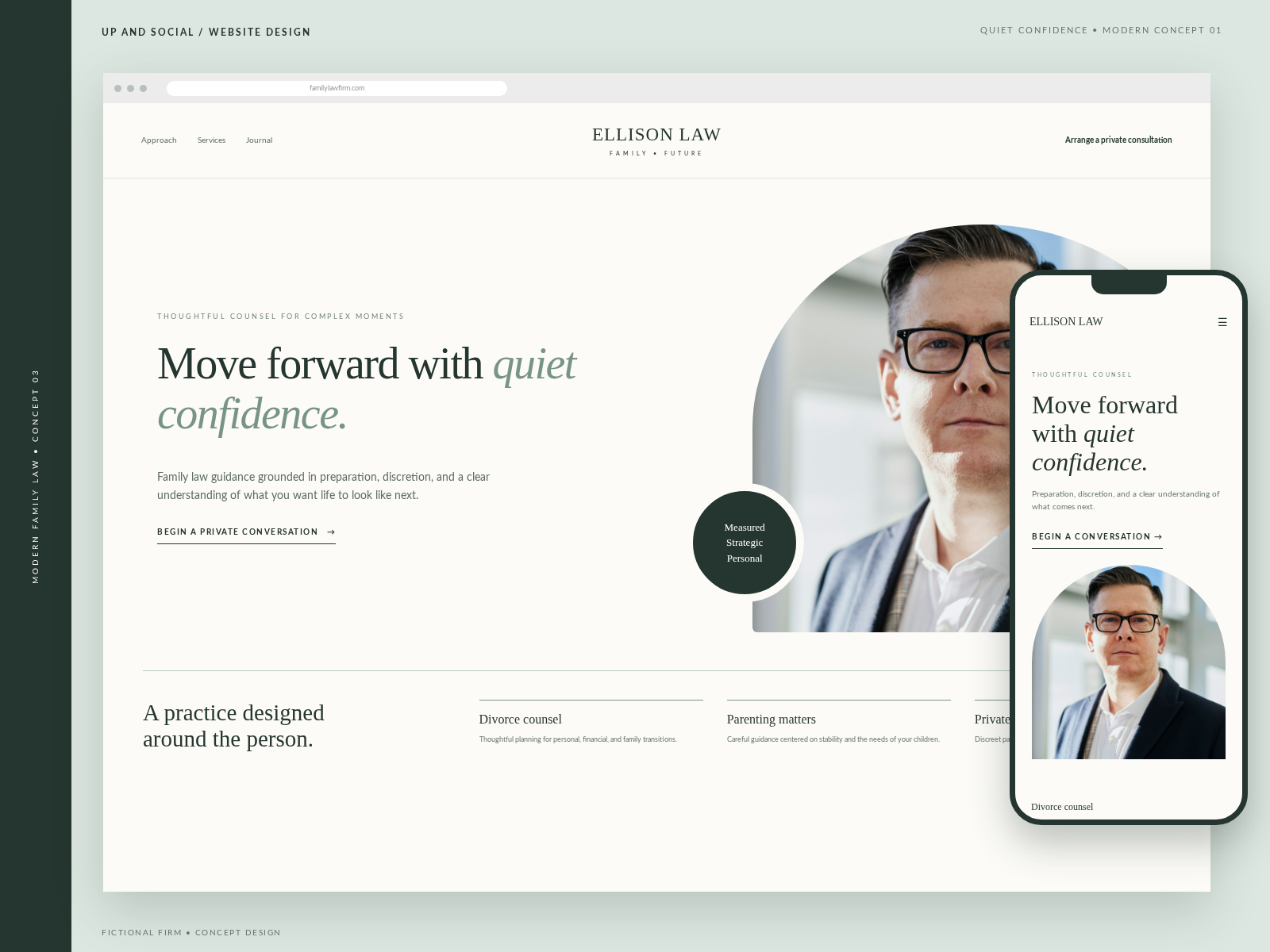
Modern Concept 01
Quiet Confidence
Editorial serif, generous whitespace, private-practice restraint. For firms whose clients value discretion.
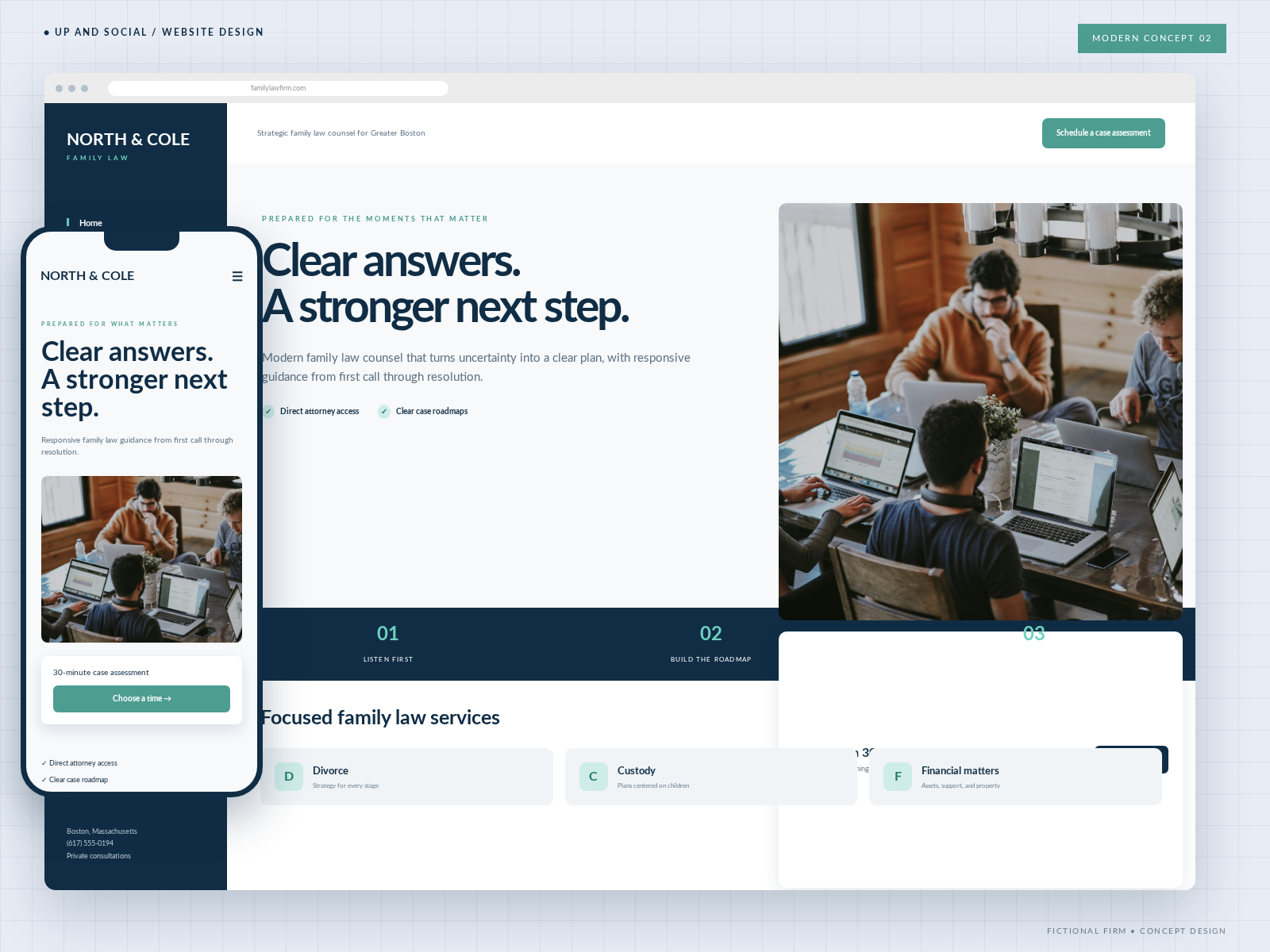
Modern Concept 02
Strategic Clarity
Grid-driven, roadmap-forward layout that turns uncertainty into an obvious next step.
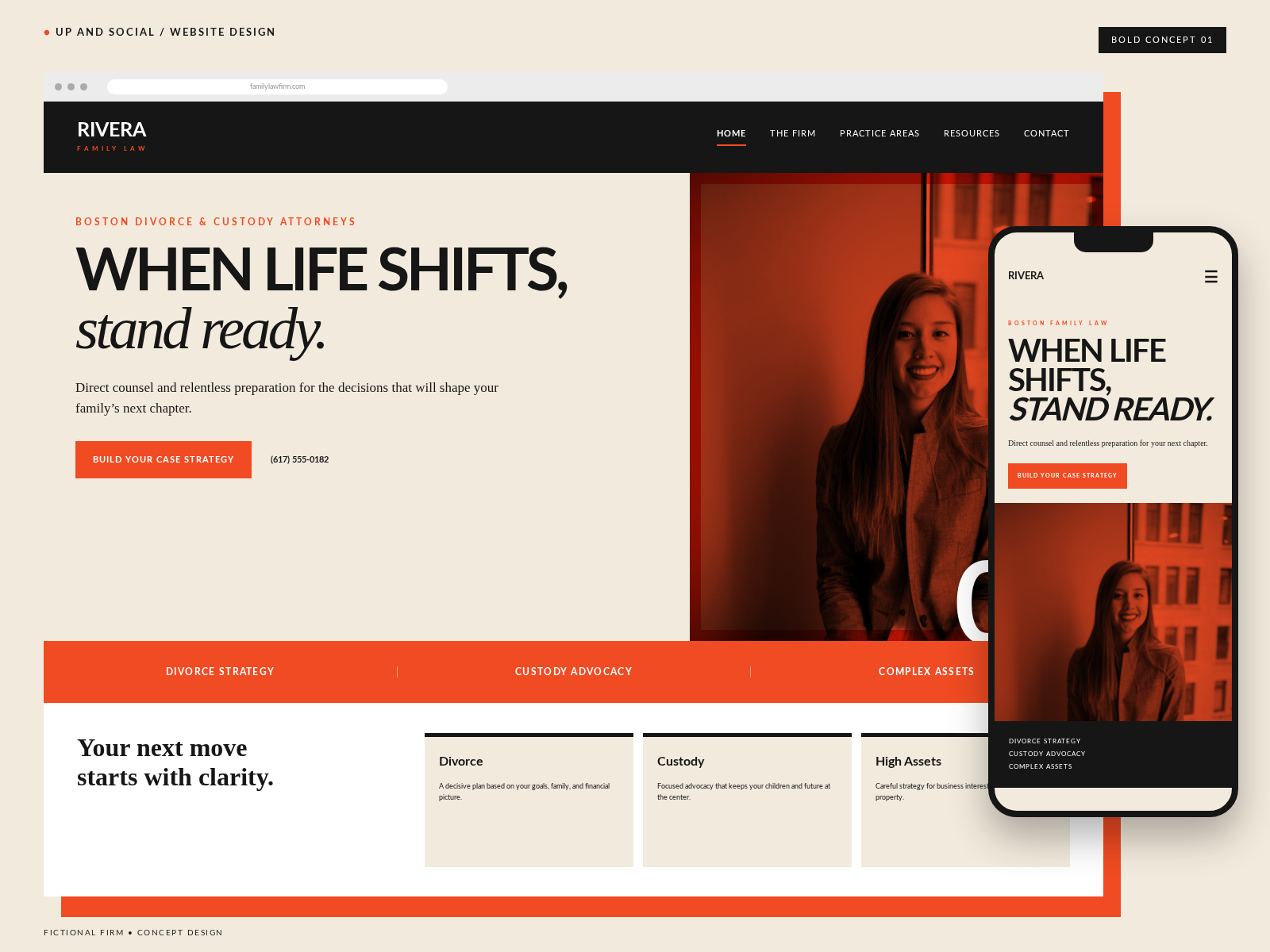
Bold Concept 01
Stand Ready
High-contrast typography and cinematic imagery for firms that lead with courtroom confidence.
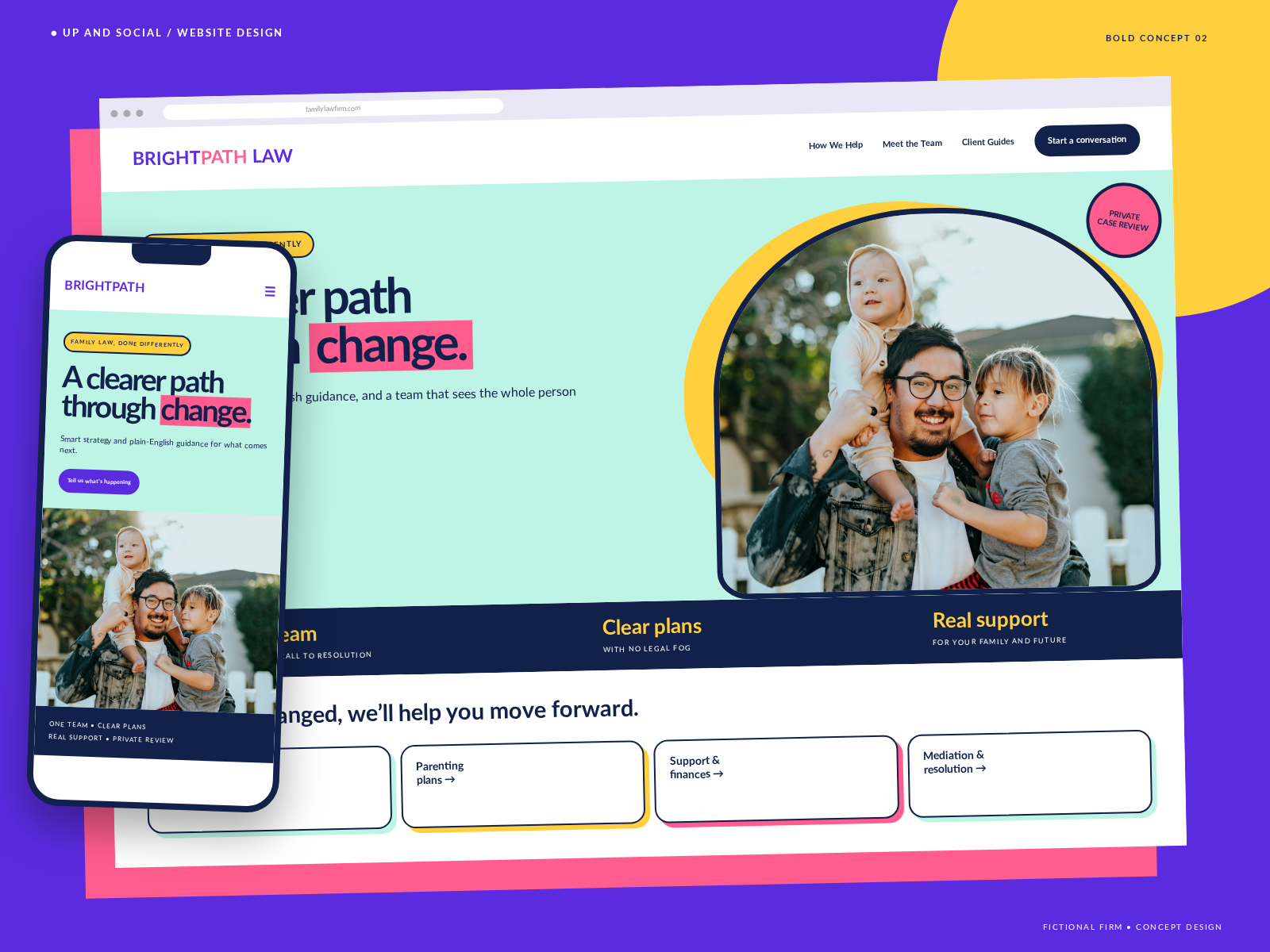
Bold Concept 02
A Clearer Path
Warm, human, family-forward. Approachable color and shape language without losing authority.
Concepts shown are fictional firms created by our design team to demonstrate range.
Recent Work
Estate planning sites that convert.
A look at recent firm websites from our studio. Every build is engineered around how estate planning clients actually decide.
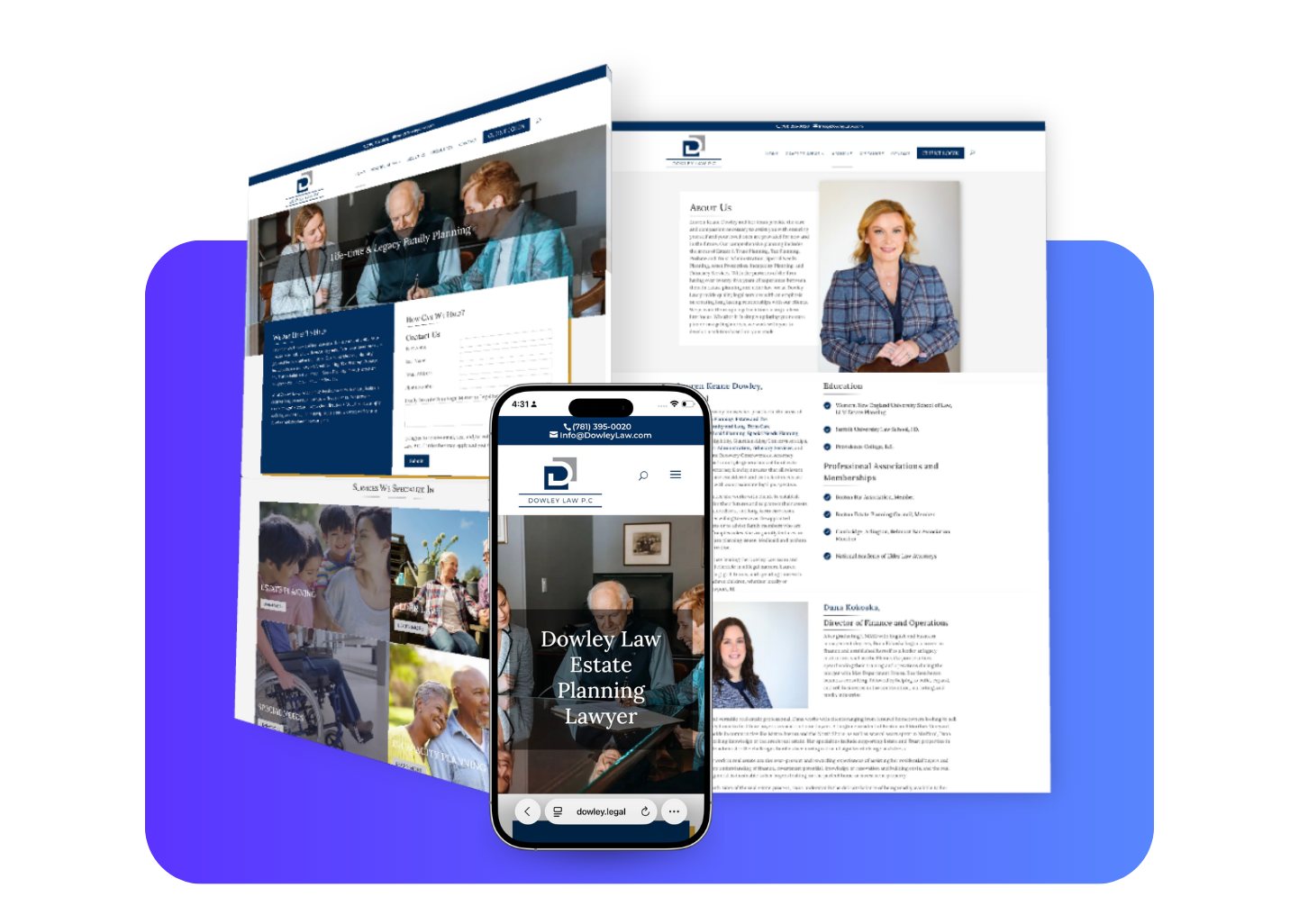
Estate Planning
Dowley Law
Estate planning practice built around trust, legacy, and a partner-led client experience.
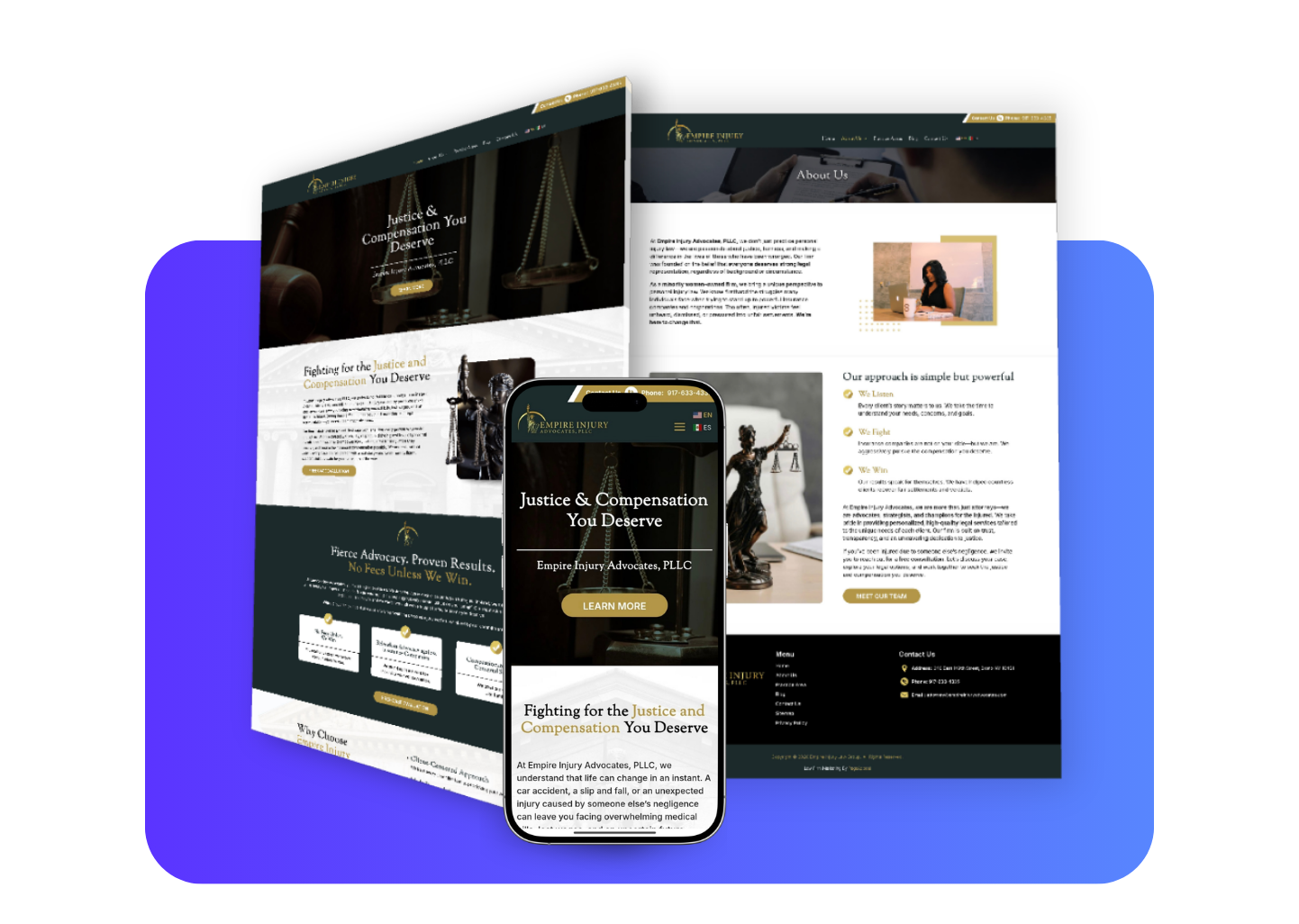
Litigation
Empire Injury Advocates
Editorial, courtroom-serious design for a firm that leads with fight and results.
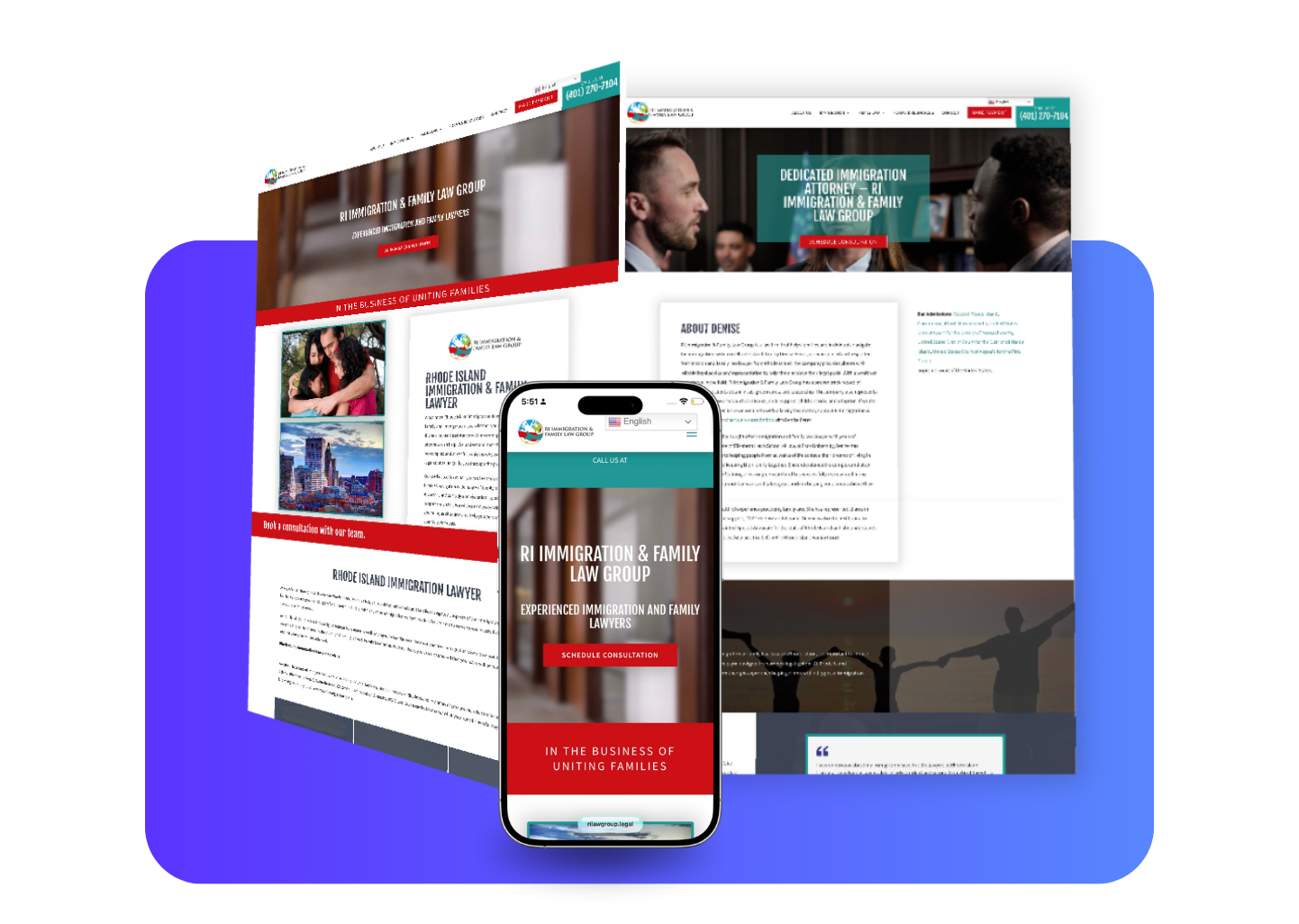
Family Law
RI Immigration & Family Law
Bilingual, family-forward site engineered to convert across two very different intents.
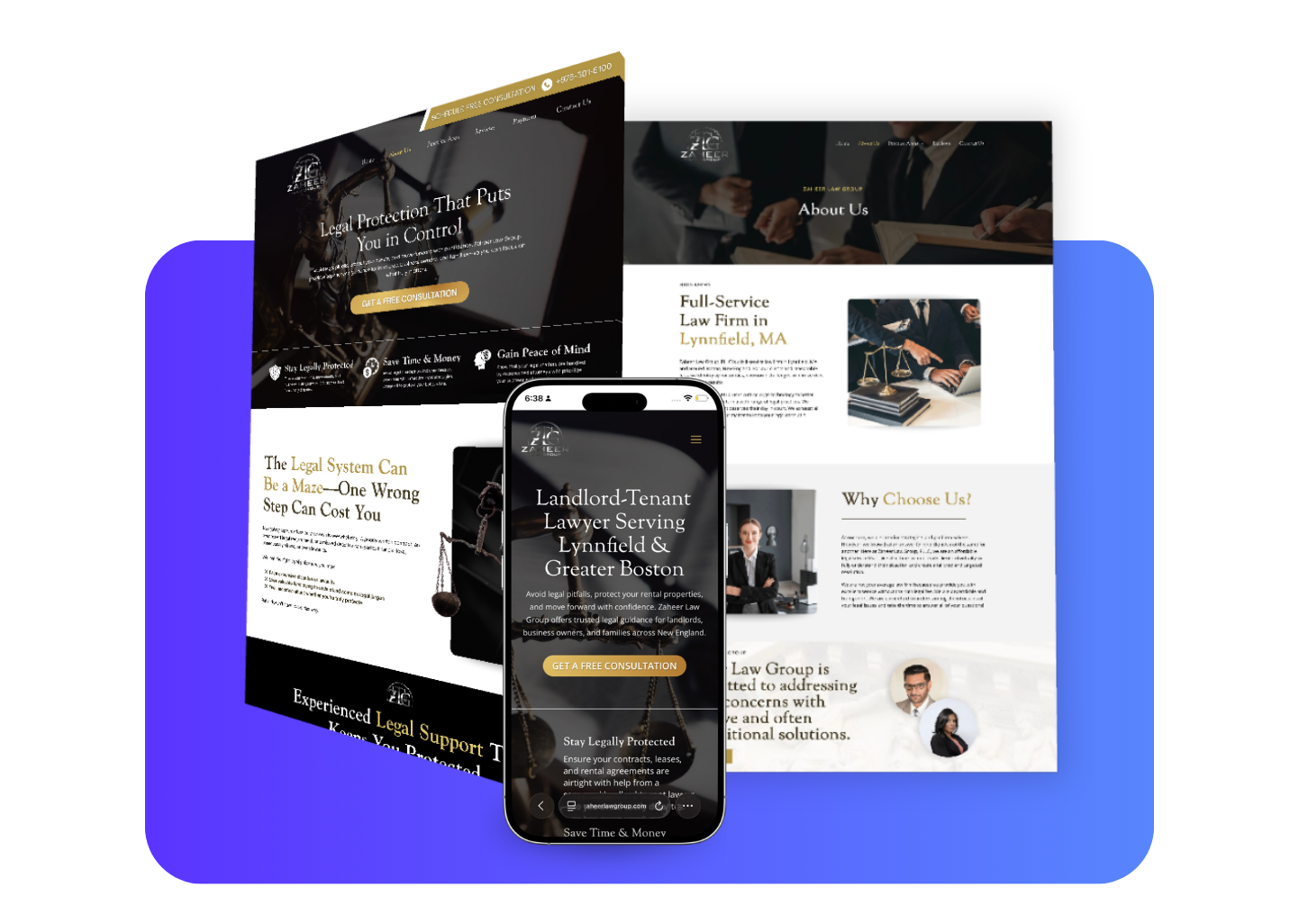
Full Service
Zaheer Law Group
Full-service firm site with clear practice areas, trust signals, and a single next step.
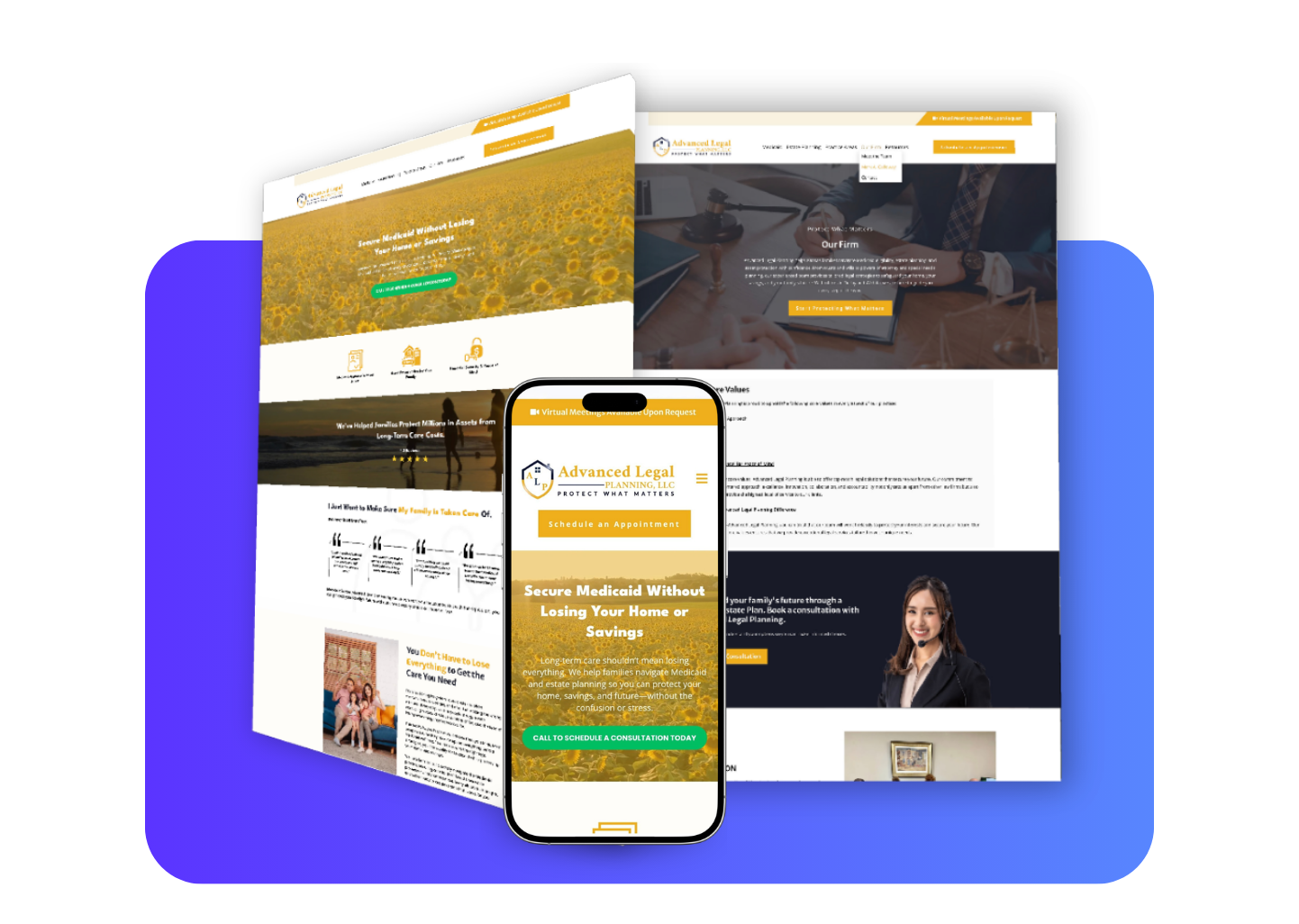
Estate Planning
Advanced Legal Planning
Medicaid and asset protection positioned as a calm, confident path forward for families.
The process, no surprises.
Six to eight weeks from kickoff to live site. Fixed scope. Fixed timeline. You always know what's next.
- 1Week 1 to 2
Discovery.
We audit your current site, research your competitors and market, and define conversion goals. You approve a sitemap and wireframe before design begins.
- 2Week 3 to 4
Design.
Full-fidelity page designs you can see and approve. Homepage, practice area pages, and consultation booking flow all designed before development starts.
- 3Week 5 to 7
Development.
Clean, fast, mobile-first build. SEO infrastructure. Scheduling integration. Content in place.
- 4Week 8
Launch.
Testing on every device, analytics setup, and two weeks of post-launch monitoring.
Total: 6 to 8 weeks from kickoff to live site.
Websites need maintenance. We handle it.
Security updates, speed optimization, seasonal content updates tied to trigger periods (tax season, new baby season, end-of-year planning), and continuous conversion testing. Our Website Care Plans keep the site working as hard as the day it launched.
Frequently asked questions.
How much does an estate planning website cost?+
Custom estate planning sites typically range from $5,000 to $12,000 depending on scope. The site usually pays for itself within the first few engagements it generates, especially when you factor in referrals from those initial clients.
I already have a website. Should I rebuild?+
We audit first. If your site has good bones and just needs conversion optimization, we'll do that. If the fundamental structure and messaging are working against you, we'll recommend a rebuild and explain exactly why.
Can I update the site myself?+
Yes. We build on platforms that allow simple content updates. For more complex changes, that's covered under the care plan.
Do you write the content?+
Yes. Every page written for your firm, your practice areas, your market. Optimized for search and written for the way estate planning clients actually think and search.
Will the site work on phones?+
Mobile-first is how we build. Over 70% of estate planning searches happen on mobile devices, often during evenings and weekends. Your site will load fast and convert on every screen size.
Your website is either converting that first visit or losing it forever.
Estate planning prospects don't come back. The visibility report shows you what someone sees when they land on your current site, and whether it's helping or hurting.
Get the Visibility ReportVisibility Report
See where your firm actually stands.
We will show you what Google and AI assistants say about your firm today, where you are invisible, and what to fix first. No pitch, no obligation.
- Delivered within 48 hours
- A real person reviews your site and rankings
- You keep the report either way